

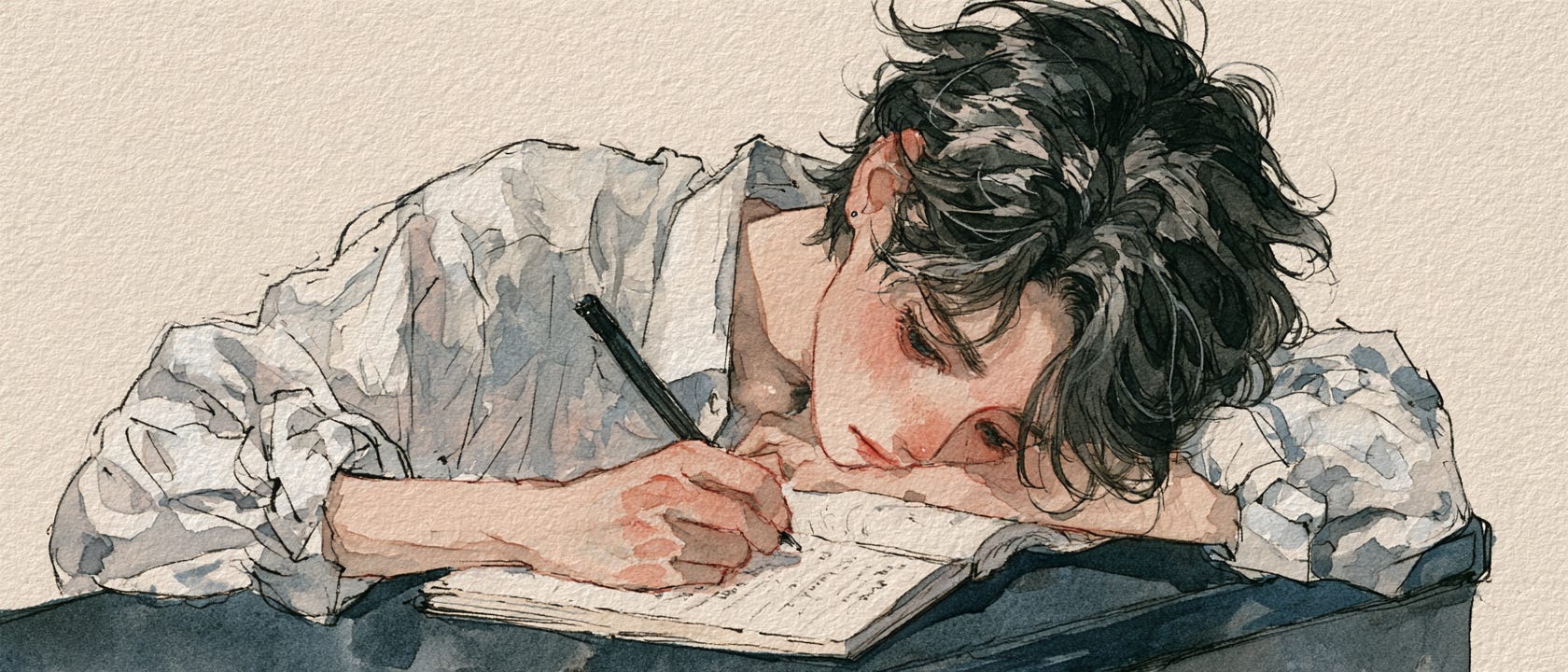
I remember the punishment.
But I don’t remember why I was being punished. It was bad enough to warrant such an extreme, drawn-out task. Maybe it had to do with schoolwork or disrespect.
I was 13 or 14 at the time, and I’m sure I deserved something drastic.
The punishment? I had to copy, by hand, the entire book of The Old Man and the Sea by Ernest Hemingway. The main driver behind this punishment was my father.
My parents did a lot of things right, but they got some major things wrong. This is the best we can hope for. None of us are perfect. We can only hope to learn from the mistakes of our forebears so we don’t repeat them. After all, we have mistakes of our own to make.
But assigning the transcription of a work of literature as punishment is a bad idea.
I understand the reasoning behind it. If you are going to have your kid write something as punishment, to make sure he never makes the same mistake again, why settle for boring, rote sentences? Why not have him write great literature instead? Some of it may rub off on him. If he remembers any of it, so much the better.
The actual result? I absolutely loathe the idea of The Old Man and the Sea. I have a visceral reaction to any hint of reading it. It has taken the better part of 20+ years to reach a point where I can entertain the idea of the book.
I guarantee this was not what my father had in mind.
As much as it is in your power, do not associate anything that is Good, Beautiful, and True with negative experiences. That association can last a lifetime. Maybe for generations.
In my mind, I will never get to read The Old Man and the Sea. I will always have to read The Old Man and the Sea. The struggle is built in before I even start. Of course, this is the same association many children get with the great books in school, because every lecture or assignment seems to crack the bones and suck all the enjoyment from the story itself. The love it lost. Most people don’t read anything after their school years, let alone the classics. They associate them with boredom, drudgery, and monotony.
But you don’t have to poison your own children.
Try to associate the Good, Beautiful, and True with positive experiences. For example, make sure your Bible reading time coincides with dessert time. Or make sure that strenuous exercise is in service to playing a game that they love.
Don’t force them to write poetry as punishment. They will only learn to hate that poem.
Don’t force them to write Scripture as punishment. They will only learn to hate those verses.
Don’t force them to play with their little sister as punishment. They will only grow to resent her.
Don’t turn dinner time at the table into endless nitpicking about manners with raised voices and sighs of disappointment.
Take care of the negative associations you create. You are cultivating their affections.
And don’t force them to transcribe The Old Man and the Sea. Read it to them instead, while they dig their spoons into big bowls of ice cream.
Great advice as always, thank you! I still can’t stand Vivaldi because a high school teacher made us memorize the entire 4 seasons, for this test where he’d play a 5-10 second excerpt and we had to name it. Must have listened to it a hundred times. End result: get ptsd 20+ years later when my kids listen to Vivaldi, sigh.
We read lots of great books these days, but either in nightly family read aloud as or as books the kids read on their own. It’s a tough balance because you want them to be well read but I recall how many great books were ruined for me by school. There’s an atmosphere of joyful learning one can hopefully create in the home that still prizes hard work and careful reading without descending into academic torture. I hope!
I have a similar reaction to Huckleberry Finn, for functionally, if not apparently, similar reasons.